
Madeleine de Sinéty - Un village
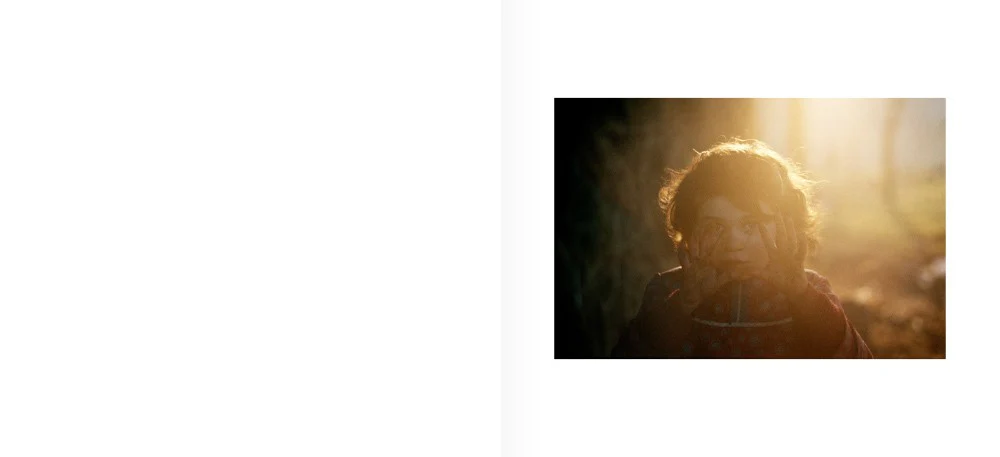
33,280 color slides, 23,076 black-and-white negatives: this concise list could have been the opening line of one of the hundreds of pages in Madeleine de Sinéty's diary. The quality of her relationship with the subjects she photographed, the drama of their gestures, the intimacy, richness, and diversity of the encounters she had in Poilley, a small village 60 kilometers north of Rennes, overflow from every page of this enormous collection of images. Born in 1934, the photographer lived in Poilley from 1972 to 1982. She subsequently made numerous trips there from the United States, where she had taken up residence. She died in 2011, without having had time to organize this archive herself. Only the black-and-white images had been partially unveiled during an exhibition at the BNF and another at the Portland Museum of Art. So it was without her, with her son Peter, that we took possession of the collection of color images and attempted, as humbly and faithfully as possible, to shed light on her work, which was neither that of a photographer responding to a commission nor that of an anthropologist, but rather the work of an artist living among a close-knit community, a rural microcosm undergoing rapid change at the dawn of modernity.
A Village received publishing assistance from the Brittany Region and support from the Alliance Française du Maine, Portland, United States.
21 × 23 cm
188 pages
ISBN 9791094060513
First edition in September 2020
Reprinted in October 2025
© Edition GwinZegal
More Images




Madeleine de Sinéty - Un village
33,280 color slides, 23,076 black-and-white negatives: this concise list could have been the opening line of one of the hundreds of pages in Madeleine de Sinéty's diary. The quality of her relationship with the subjects she photographed, the drama of their gestures, the intimacy, richness, and diversity of the encounters she had in Poilley, a small village 60 kilometers north of Rennes, overflow from every page of this enormous collection of images. Born in 1934, the photographer lived in Poilley from 1972 to 1982. She subsequently made numerous trips there from the United States, where she had taken up residence. She died in 2011, without having had time to organize this archive herself. Only the black-and-white images had been partially unveiled during an exhibition at the BNF and another at the Portland Museum of Art. So it was without her, with her son Peter, that we took possession of the collection of color images and attempted, as humbly and faithfully as possible, to shed light on her work, which was neither that of a photographer responding to a commission nor that of an anthropologist, but rather the work of an artist living among a close-knit community, a rural microcosm undergoing rapid change at the dawn of modernity.
A Village received publishing assistance from the Brittany Region and support from the Alliance Française du Maine, Portland, United States.
21 × 23 cm
188 pages
ISBN 9791094060513
First edition in September 2020
Reprinted in October 2025
© Edition GwinZegal
Product Information
Product Information
Shipping & Returns
Shipping & Returns
Description
33,280 color slides, 23,076 black-and-white negatives: this concise list could have been the opening line of one of the hundreds of pages in Madeleine de Sinéty's diary. The quality of her relationship with the subjects she photographed, the drama of their gestures, the intimacy, richness, and diversity of the encounters she had in Poilley, a small village 60 kilometers north of Rennes, overflow from every page of this enormous collection of images. Born in 1934, the photographer lived in Poilley from 1972 to 1982. She subsequently made numerous trips there from the United States, where she had taken up residence. She died in 2011, without having had time to organize this archive herself. Only the black-and-white images had been partially unveiled during an exhibition at the BNF and another at the Portland Museum of Art. So it was without her, with her son Peter, that we took possession of the collection of color images and attempted, as humbly and faithfully as possible, to shed light on her work, which was neither that of a photographer responding to a commission nor that of an anthropologist, but rather the work of an artist living among a close-knit community, a rural microcosm undergoing rapid change at the dawn of modernity.
A Village received publishing assistance from the Brittany Region and support from the Alliance Française du Maine, Portland, United States.
21 × 23 cm
188 pages
ISBN 9791094060513
First edition in September 2020
Reprinted in October 2025
© Edition GwinZegal